
Folic acid in UK flour: what’s changing and what does it mean for you?
From 13 December 2026, folic acid in UK flour will become mandatory for most non-wholemeal wheat flour, including ordinary plain and self-raising flour. The UK government’s aim is to prevent around 200 cases of serious birth defects each year.
And it’s not just bread. The new requirement means folic acid will be present in many everyday foods, including biscuits, crackers, cakes, pastries and other products made with this flour.
Not every product will be affected. Wholemeal flour and flour from qualifying small mills are exempt. Finished foods imported into the UK are also not required to meet the same flour fortification rules.
How will you know if a product contains added folic acid? Manufacturers must declare it in the ingredients list when fortified flour is used. It may appear alongside the other vitamins and minerals added to wheat flour, so it’s worth checking the label.
While we understand the government’s aim to prevent serious birth defects, we question whether adding synthetic folic acid to food consumed by millions of people, including children, is the right approach when questions about the long-term effects of lifelong exposure remain unanswered.
What is the difference between folate and folic acid?
Folate is vitamin B9, naturally found in leafy greens, beans and lentils.
Folic acid is the man-made, synthetic form of vitamin B9 used in supplements and fortified foods.
Both provide vitamin B9, but our bodies process them differently.
Folic acid is generally absorbed more efficiently than folate found naturally in food. However, some can enter the bloodstream before being converted into other forms. This is called unmetabolised folic acid, and researchers are still investigating its long-term health effects.
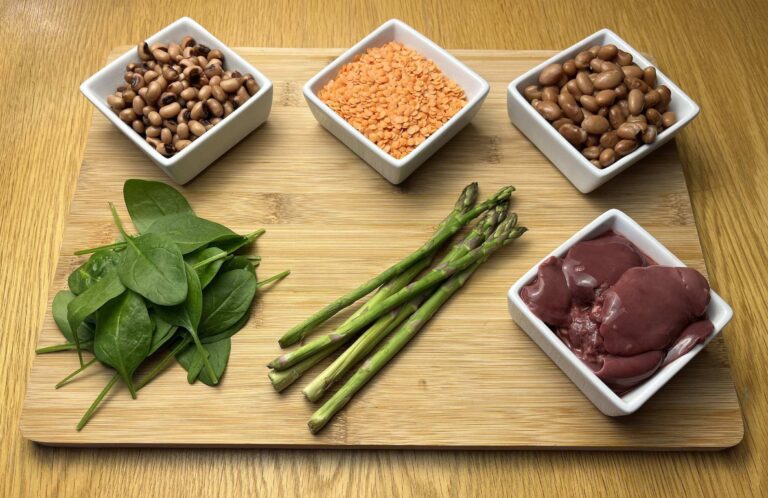
Natural sources of folate (vitamin B9), including spinach, asparagus, lentils, beans and liver. Unlike synthetic folic acid, folate occurs naturally in a wide variety of foods.
What does the research say about the health risks of folic acid?
Some studies have raised concerns.
A 2007 clinical trial involving more than 1,000 adults with a history of colorectal polyps found an increased occurrence of advanced colorectal lesions among those taking 1 mg of folic acid daily.
A 2006 study found an association between unmetabolised folic acid in the bloodstream and reduced activity of natural killer cells, which help defend against infection. However, this does not establish that folic acid caused the reduction.
A larger 2013 analysis involving nearly 50,000 people found no statistically significant increase in overall cancer incidence from folic acid supplementation.
These studies don’t directly tell us what happens when folic acid is added to flour. The doses studied were generally higher than those expected from fortification.
So while the research doesn’t establish that fortification is dangerous, questions about lifelong exposure remain.
Should I avoid folic acid in fortified products if I have an MTHFR variant?
We don’t all process folate in exactly the same way.
The MTHFR gene helps our bodies process folate (vitamin B9), whether it comes naturally from food or from synthetic folic acid. Some genetic variants can make this process less efficient.
Our Geno 3 DNA Insights test examines these variants, so if you’ve had your test, you’ll find this information in your report.
Research has not clearly established that having an MTHFR variant makes synthetic folic acid harmful. Common MTHFR variants are not, on their own, a reason to avoid folic acid. However, questions remain about the long-term effects of additional folic acid exposure.
At Geno 3, we favour getting nutrients from whole foods wherever practical.
What can you do? If you’d prefer to limit additional folic acid in your diet, wholemeal flour products are an option. Check labels for added folic acid and consider your overall nutritional needs and circumstances.
If you’re pregnant or planning a pregnancy, discuss your individual circumstances and nutritional needs with an appropriate healthcare professional.
Is lifelong consumption of fortified folic acid safe for children?
Children will also eat foods made with fortified flour, sometimes alongside other fortified foods or supplements.
The government has assessed expected intakes and potential risks, but research cannot rule out every possible effect of lifelong exposure.
Excessive folic acid intake can also complicate the recognition of vitamin B12 deficiency.
Surely these are important considerations before changing the food supply for an entire population?
Should folic acid fortification be mandatory? What we think at Geno 3
At Geno 3, we have serious reservations about mandatory folic acid fortification.
We recognise the importance of preventing neural tube defects. But is adding synthetic folic acid to food consumed by millions of people the right approach?
Why aren’t we putting more emphasis on improving diets, understanding individual nutritional needs and making better-quality food accessible?
Our genetics, diets and health histories differ. That’s why we believe personalised nutrition matters.
We believe decisions affecting an entire population deserve the highest level of scrutiny.
Because not finding evidence of harm isn’t the same as proving something is harmless.
And we think it’s reasonable to keep questioning whether mandatory fortification is the right response to a pregnancy-related risk, particularly while questions about long-term exposure remain unanswered.
References and Citations
- UK Government: Folic acid fortification announcement
- UK Government: Bread and flour labelling and composition guidance
- Cole et al., 2007: Folic Acid for the Prevention of Colorectal Adenomas
- Troen et al., 2006: Unmetabolised Folic Acid and Natural Killer Cell Activity
- Vollset et al., 2013: Folic Acid Supplementation and Cancer Incidence
- CDC: MTHFR Gene Variant and Folic Acid Facts
- NIH: Folate and Health, Evidence Review
- Food Standards Scotland: Folic Acid Fortification Facts